
単語の分類
単語とは、言葉の最小の単位のことです。
単語は、
「自立語 or 付属語」、「活用がある or 活用がない」、「文法上の性質や働き」で種類を分けることができます。
A word is the smallest unit of language.
Words can be classified in several ways: by 「independent word or ancillary word」, by 「whether or not it conjugates」, and by 「its grammatical nature and function」.
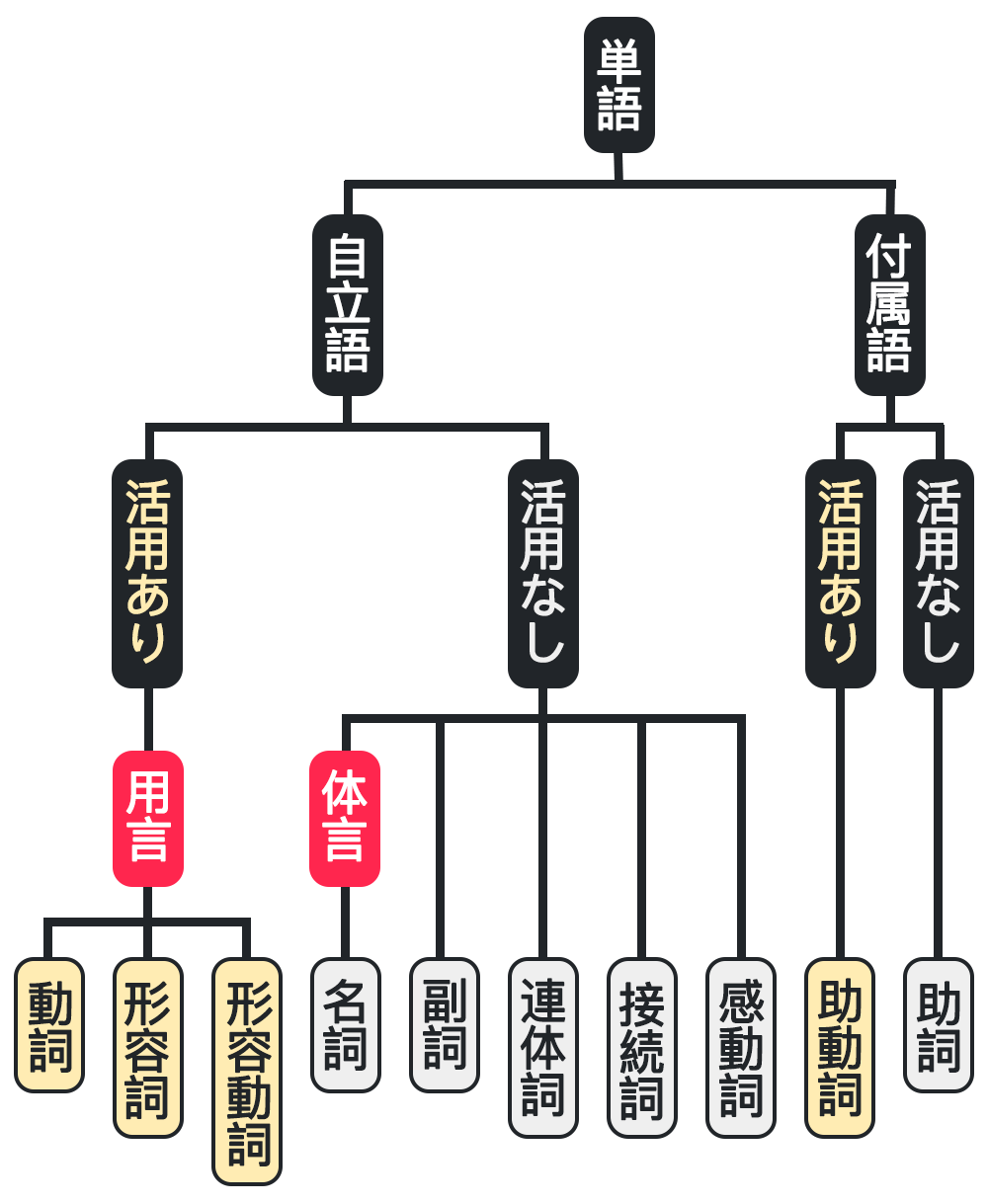
自立語 or 付属語
自立語とは、それだけで意味が分かり、文節を作ることができる単語のことです。基本的に文節の最初にあり、1つの文節に1つだけしかありません。
付属語とは、それだけでは意味が分からず、文節を作ることができない単語のことです。必ず自立語と一緒に使い、1つの文節の中に複数含まれることもあります。
An independent word is a word that has meaning on its own and can form a phrase. It basically comes at the beginning of a phrase, and there is only one per phrase.
An ancillary word is a word that has no meaning on its own and cannot form a phrase. It is always used together with an independent word, and a single phrase may contain several of them.
例文
今日、私は大きな日本語の学校に行きました。
解説
[文節の区切り] 今日、 / 私は /
大きな / 日本語の /
学校に / 行きました。
[自立語] 今日・私・大きな・日本語・学校・行き
[付属語] は・の・に・まし・た
「行きました」の文節の中には、付属語が2つ含まれています。
活用がある or 活用がない
活用とは、その単語の形が変化することです。
自立語と付属語は、活用があるか、活用がないかに分けることができます。
Conjugation means that the form of a word changes.
Independent words and ancillary words can each be divided into those that conjugate and those that do not.
例文
今日、私は大きな日本語の学校に行きました。
解説
[文節の区切り] 今日、 / 私は /
大きな / 日本語の /
学校に / 行きました。
[活用がある自立語] 行き
[活用がない自立語] 今日・私・大きな・日本語・学校
[活用がある付属語] まし・た
[活用がない付属語] は・の・に
さらに、活用がある自立語を用言といい、主語になれる活用がない自立語を体言といいます。
Furthermore, independent words that conjugate are called 「inflectable words」, while independent words that do not conjugate but can become the subject are called 「substantives」.
文法上の性質や働き
単語を文法上の性質や働きで分けたものを品詞といいます。品詞は、 動詞・形容詞・形容動詞・ 名詞・連体詞・接続詞・ 感動詞・副詞・助動詞・助詞の10種類があります。
Words classified by their grammatical nature and function are called 「parts of speech」. There are ten parts of speech: the verb, the i-adjective, the na-adjective, the noun, the adnominal, the conjunction, the interjection, the adverb, the auxiliary verb, and the particle.
例文
今日、私は大きな日本語の学校に行きました。
解説
[動詞] 行き
[名詞] 今日・私・日本語・学校
[連体詞] 大きな
[助詞] は・の・に
[助動詞] まし・た